
Re-engineering the future: how T Levels are building tomorrow’s engineering workforce
Engineering is one of the most dynamic and fast-evolving sectors in the UK – driven by constant innovation, new technologies and the need to solve global challenges. From aerospace to maritime, automotive to energy, engineers today are designing smarter systems, developing cleaner technologies, and shaping the industries that will define our future.
This National Engineering Day, the theme “From the AI–Z of Engineering” celebrates just how broad, creative and essential engineering is – and highlights the need to ‘re-engineer’ perceptions of what it means to be an engineer. It’s not just about hard hats and spanners – today’s engineers are tackling some of the biggest challenges facing our planet.
But to keep pace with this evolution, businesses need access to a new generation of technically skilled, adaptable thinkers. That’s where T Levels come in.
Bringing in young, skilled talent to an evolving industry
T Levels are technical qualifications for 16–19-year-olds, designed with engineering and manufacturing employers to address skills gaps and help businesses bring young talent on board.
Each T Level course includes a 45-day industry placement with an employer, which gives businesses a chance to bring in motivated young people, introduce them to the business, and develop their skills on real projects.
Bringing fresh perspectives, digital know-how, and a willingness to learn and adapt, T Level students are already making a real difference to engineering and manufacturing firms across the UK.
“With T Levels, their placements last for 45 days, which offers a lot of scope,” explains Kate Houlden, Managing Director at Like Technologies, an engineering firm in Lancashire specialising in hardware and software solutions for the electronics industry. “They’re further on in their education [than work experience students] and have already made the decision to pursue a career in engineering. T Level students are also a lot more capable of working independently than those on school placements.”
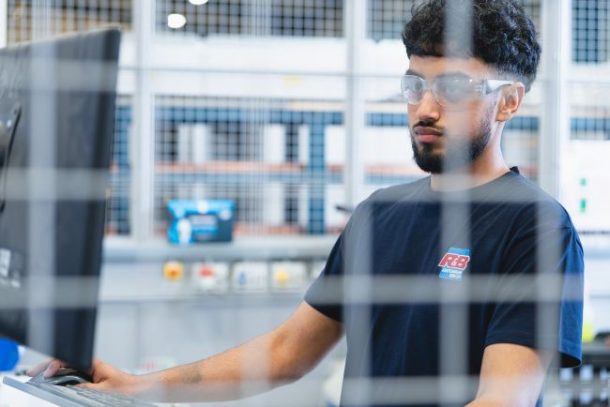
Students were set to work on real-world tasks – including soldering, repair and refurbishment, and soak testing. “At the end of the placement, their confidence levels had skyrocketed,” says Kate. “It was great to see how they’d applied what they’d learnt in college to a real workplace environment.”
Fresh perspectives that drive productivity and innovation
Hosting a student on a T Level placement offers businesses the chance to see problems through new eyes, test ideas and develop homegrown talent from the ground up.
Andy Wilding, Technical Manager at Lyndhurst Precision Engineering, a family-run company in Chorley producing components for the energy and aerospace industries, has seen the impact first-hand: “You get a feel for what the students are good at,” Andy explains. “Our current student, Lucy, was great on the semi-conversational programming for our long-bed CNC machines with Heidenhain controls. Dan, one of our experienced machinists, showed her how to use it and she picked it up straight away – we were really impressed.”
At Lyndhurst, students have applied their technical knowledge to CAD design, electrical component repair, milling, turning, fabrication and fitting. “Once they’ve been given a bit of induction and training, they’re able to do jobs that really need doing,” says Andy. “We don’t make up tasks just to keep them busy; they get stuck in and add real value.”
From placement to recruitment
Many businesses hosting T Level students are finding they’re not just helping to plug immediate skills gaps – they’re also shaping their long-term recruitment strategies.
“One of our second-year students really stood out,” says Kate from Like Technologies. “She was outstanding. She’s been back working one day a week since her placement ended, and we’ve now offered her a full-time position once she’s completed her T Level course.”
At Lyndhurst, the story is similar. Having worked with several T Level students over the last few years, Andy says they’ve become a vital part of the team:
“If I could’ve had them all back this week, I’d have leapt at the chance! We really could use the extra hands to get us through a busy spell. I’ve lost count of the number of positive comments from the team, and we’re already talking to them about coming back as apprentices once they finish their course.”
Build your future workforce
By offering a T Level industry placement, engineering and manufacturing businesses can play an active role in shaping the next generation of talent – while strengthening their own teams in the process.
T Levels: Tomorrow’s Talent, Today.
Find out how to host an industry placement at employers.tlevels.gov.uk.