

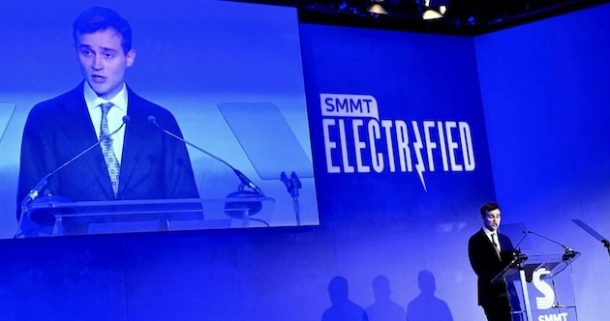
Event Review: SMMT Electrified Conference 2026 – Calls for the ZEV Mandate to be reviewed sooner rather than later
The Zero Emission Vehicle (ZEV) Mandate was centre stage at the Society of Motor Manufacturers and Traders (SMMT) Electrified Conference 2026, with industry calling for its review – which is due to be published early next year – to be brought forward.
The ZEV Mandate, which lays down increasing targets each year for the percentage of zero emission cars sold, penalises manufacturers with significant fines if they miss the targets. Some views were expressed at the event that the ZEV Mandate needs fundamental reappraisal and should be changed instead to CO2-based targets.
In a keynote speech at the event, Keir Mather MP, Minister for Aviation, Maritime and Decarbonisation, DfT, confirmed the government’s commitment to electric vehicles, and said that current global events reinforced the need to move away from fossil fuels. The government has already introduced flexibilities into the ZEV Mandate, at the industry’s request, and work is starting now for the 2027 review.
EV sales have been strong over recent years with fleets and businesses, but retail demand has been weak. The government has now introduced consumer incentives, in the form of the Electric Car Grant, but at the same time the Chancellor has proposed a new road tax on EVs in the form of pay-per-mile pricing. The overwhelming view from the industry is that this sends mixed messages to car buyers about electric cars, at a time when the industry needs clear, positive messages about EVs. The example of Norway was quoted, where incentives to customers have been the focus rather than regulations on manufacturers.
The government released its full report today on industry compliance with the ZEV Mandate and VETS (Vehicle Emissions Trading Schemes Order) for 2024 showing the market is over complying with Net Zero targets. However the SMMT says that the industry has funded over £10 billion of discounting on EVs over the past two years, which is unsustainable.
The UK also has to meet increasing targets for electric vans and electric HGVs, with sales of both currently facing challenges; although there has recently been an uplift in the plug-in truck grant, the lack of public charging infrastructure for HGVs in the UK is a particular issue.
Electric buses – not subject to any ZEV Mandate targets – are a success story: 27% of buses in 2025 were zero emission. Advantages include fixed routes, limited mileage and limited use overnight; they’re ideal if the operator has depot charging.
An issue that came up at the event on a number of occasions was the (expensive) price of electricity in the UK, which impacts the cost of manufacturing vehicles as well as charging EVs, especially when using public charging.
As well as collaboration within the industry, a joined-up approach to communication about EVs certainly seem to be needed between the UK government, its different departments including DfT and the Treasury, and the SMMT and its industry members – all of whom say they are committed to Net Zero.
Republished from: